

Canary Islands Overtourism in 2025: Protests, Numbers, and the Road to Sustainable Travel
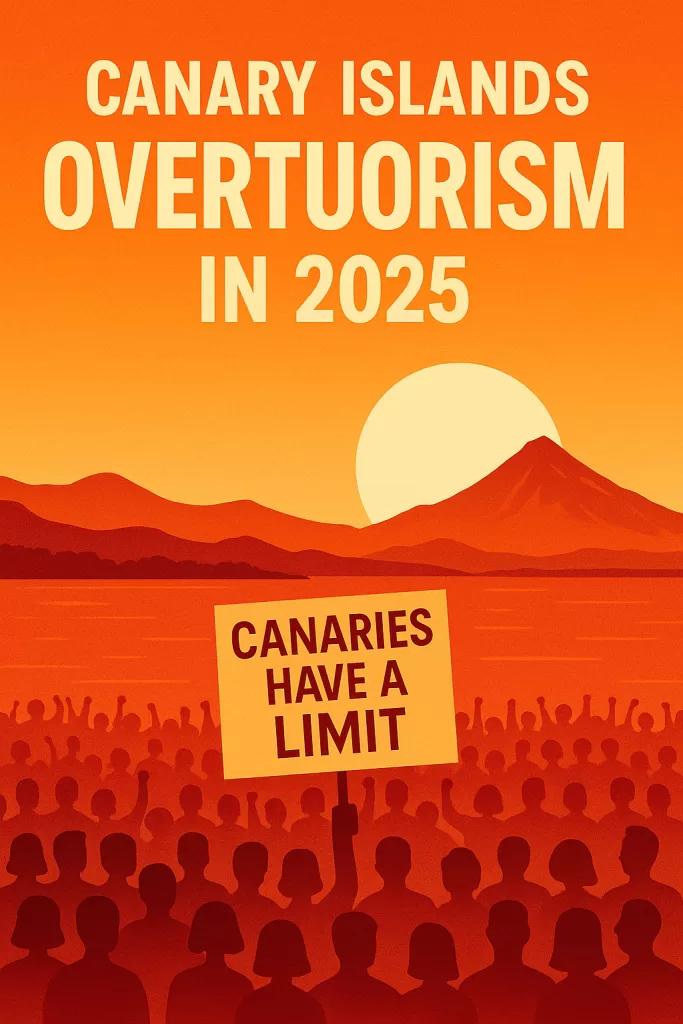
Canary Islands overtourism protests 2025 is not a buzzword—it is a lived reality across Tenerife, Gran Canaria, Lanzarote, Fuerteventura and the smaller islands. Marches have multiplied under the slogan “Canaries have a limit”, while the archipelago registers record visitor numbers and a resident population of about 2.26 million. This piece explains what is happening, why it matters, and what a fair transition could look like.In this article
- 2025 snapshot: key numbers
- Timeline of protests (2024–2025)
- Where pressure is highest
- Policy toolbox: realistic solutions
- How to visit responsibly
- Canary Islands vs. resident capacity (table)
- Glossary
- FAQ
📑 Aquí podrás encontrar 👇
2025 snapshot: key numbers
Population: ~2.26M residents 2025
Monthly arrivals: >1M in peak months record highs
Tourist spend: new monthly records in 2025
Protest slogan: “Canaries have a limit”
These indicators summarize why the phrase overtourism Canary Islands 2025 trends in search: demand growth has outpaced housing, water and transport capacity.
Timeline of protests (2024–2025)
- Apr 2024: island-wide marches put overtourism and housing on the agenda.
- May 2025: coordinated protests across the archipelago and mainland cities rally thousands beneath “Canaries have a limit”.
- Summer 2025: record-level tourist months continue; debate intensifies around caps, eco-fees and rental rules.
The movement is not anti-visitor; it demands a sustainable model that protects community life and protected landscapes.
Where pressure is highest
1) Housing & short-term rentals
In resort municipalities and capital areas, residents compete with high-yield holiday listings. Without firm licensing and enforcement, long-term supply shrinks and prices spike—especially for workers in tourism-dependent towns.
2) Water & protected areas
Finite island ecosystems meet seasonal demand spikes. Drought cycles, desalination costs, wastewater treatment and trail erosion create a fragile balance for beaches, dunes and volcanic parks.
3) Transport & public services
Narrow coastal corridors and mountain roads saturate during peak weeks. Health and emergency services scale up seasonally but still report hotspots of congestion and response delays.
Policy toolbox: realistic solutions (what locals are asking for)
- Visitor caps tied to carrying capacity: limit numbers in saturated zones and seasons; publish thresholds and audits.
- Holiday-rental rules: strict licensing, fines for illegal listings, and zoning that protects residential supply.
- Eco-fees with transparent earmarking: ring-fence funds for water, waste, trails and biodiversity projects.
- Demand-shifting: incentives for off-season travel and diversification beyond a handful of hotspots.
- Housing reinvestment: public-private programs for affordable rentals for workers in tourism areas.
- Smarter mobility: island cards for public transport, park-and-ride, and safer active travel near beaches and parks.
A credible roadmap combines limits where ecosystems are fragile, rules where markets distort housing, and reinvestment where communities shoulder the burden.
How to visit responsibly (and still have a great trip)
- Choose licensed accommodation and avoid illegal listings.
- Prefer public transport or shared transfers; avoid peak-hour car trips in narrow corridors.
- Reduce water use (short showers, refillable bottles); respect signage in protected areas.
- Visit off-peak months and lesser-known towns; book certified guides for nature activities.
- Support local businesses (markets, island-made goods) to distribute benefits fairly.
Canary Islands vs. resident capacity (illustrative table)
| Indicator | Value (2025) | Why it matters |
|---|---|---|
| Resident population | ~2.26 million | Baseline for housing, water and health capacity planning. |
| Peak monthly arrivals | >1.0 million | Seasonal surges exceed local infrastructure in hotspots. |
| Tourist expenditure (monthly record) | Record highs in 2025 | Strong economy but needs fair reinvestment in public services. |
| Priority issues | Housing, water, congestion | Targets for eco-fees, caps, rental rules and mobility upgrades. |
Figures vary by month and island. The structural challenge is the gap between seasonal demand and year-round capacity.
Glossary
Overtourism: when visitor numbers at certain times and places exceed a destination’s environmental, social or infrastructure capacity.
Carrying capacity: maximum visitors a site can host without unacceptable impacts.
Regenerative tourism: model that aims to leave nature and communities better than before through restoration and fair value distribution.
FAQ
Are the protests anti-tourist?
No. The message is pro-community and pro-nature: caps and rules where necessary, plus reinvestment to keep quality of life high.
Is it a good time to visit?
Yes—if you plan responsibly: licensed stays, off-peak timing, public transport and respect for protected areas.
Which islands feel the most pressure?
Tenerife, Gran Canaria, Lanzarote and Fuerteventura concentrate arrivals; small islands face sharp seasonal spikes.
What will change in 2025?
Expect pilot caps in saturated sites, eco-fee debates, tighter rental enforcement and demand-shifting campaigns.
Overtourism in the Canary Islands in 2025 is a solvable challenge. With limits where needed, smarter rules and real reinvestment, the archipelago can protect its communities and ecosystems—while remaining an exceptional place to visit.
La Cueva de las Brujas de Los Llanos – Lugar de rituales en La Palma.
Las Palmas: Capital de las Islas Canarias
La aparición de las monjas de Antigua – Figuras religiosas que se manifiestan.
La Bruja de la Playa de las Alcaravaneras – Hechicera en Gran Canaria.

Descubre el Torreón Santa Cruz de Tenerife

¿Por qué elegir Hospital Febles Campos?
Subir
Deja una respuesta